
The biggest Christmas markets in the UK are not the same list as the ones you can trade at this year. Edinburgh’s applications for 2026/27 have closed, and the next window is Spring 2027. Bath’s 2026 applications have closed too. Birmingham says it has no vacant stallholder sites at all, and cannot consider applications at present. Three of the best-known names in the country, and for this season all three are shut.
That is the gap this guide is written for. Search for the biggest UK Christmas markets and you get scale: Manchester’s 300-plus stalls and chalets in a typical year, Bath’s cap of 210, the crowds, the lights and the mulled wine. What you do not get is the thing that actually decides your season — whether the organiser has published anything you can act on, and whether the door is open at all.
So every market here is weighed twice. Once on what it is: the 2026 dates, the stall or chalet count and the main attractions, wherever the organiser has published them. And once on what you can do about it — whether there is a form to complete today, a pack to cost and monitor, or nothing to do this year except learn from it and diary the next window.
Where an organiser has not published its 2026 dates, we say so. We have not carried last season’s over.
How to compare the biggest UK Christmas markets for 2026 as a trader
A trader’s shortlist is not a visitor’s shortlist. Four things decide it.
First, what the organiser has published about 2026 dates — that is the size of the commitment, and it varies enormously. Bath’s 2026 market runs for 18 days; Birmingham’s runs from 5 November to 24 December. Second, published scale: chalet or trader numbers tell you how many stalls you are standing among, and Hyde Park’s Christmas Market, for instance, says more than 60 traders are joining it in 2026. Third, attractions — context only. They tell you what kind of crowd the site pulls and what you would be trading alongside, which is why the same page that lists handmade crafts also lists shopping staples and food and drink. Fourth, and the one most rankings skip: what the organiser has published for traders, and whether that route is open.
That last point sorts the list into three rungs. A market is an apply or register job when there is something you can complete now — a database registration, an application form, an open invitation to get in touch. It is a prepare and monitor job when the dates and the shape of the event are public but the trader door is not, so the useful work is costing, stock and diary rather than paperwork. And it is a benchmark when the 2026 season is effectively decided without you, which tells you what to aim at next year rather than this one.
A gap in the table is information too. Where an organiser has not published a cost, a stall count or a requirement, that is not a detail you can safely assume from another market — it is a question to put to the organiser before you commit a van and a fortnight to it. Glasgow, Covent Garden and London Bridge are missing from the table altogether for the same reason: there was too little published to fill a row. Each has a section of its own below.
|
Market |
2026 dates |
Trader route |
Do this now |
|
Manchester Christmas Markets |
Yet to be announced |
Open: council database registration |
Register |
|
Birmingham Frankfurt Christmas Market |
5 November to 24 December |
No vacancies, none being considered |
Benchmark only |
|
Bath Christmas Market |
26 November to 13 December |
Closed for 2026 |
Prepare for the next window |
|
Nottingham Winter Wonderland |
Opens 12 November; close not published |
Open: trader application form |
Register interest |
|
Edinburgh Christmas Market |
14 November to 3 January 2027 |
Closed until Spring 2027 |
Benchmark; diary Spring 2027 |
|
Hyde Park Winter Wonderland |
19 November to 3 January 2027 |
Not published |
Cost it and monitor |
|
Southbank Centre Food Market |
Yet to be announced |
Open: invites traders to apply |
Apply if you sell food |
|
Bristol Christmas Market |
Yet to be announced |
Open: council welcomes applications |
Enquire, ask for a site visit |
|
St Nick’s Christmas Market, Bristol |
20 November to 24 December |
Chalets closed, umbrellas open |
Get approved |
Manchester Christmas Markets: register on the database first
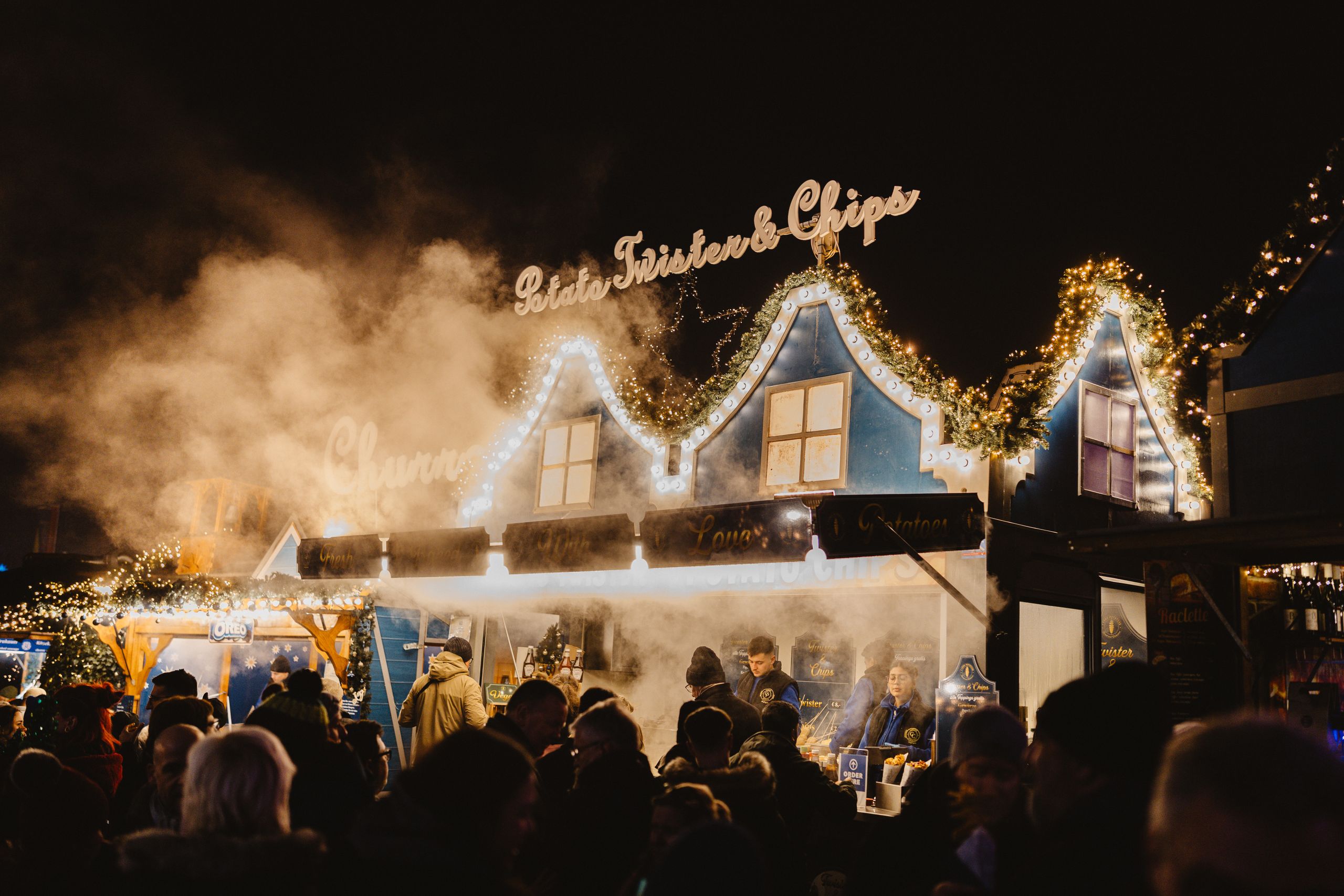
The trader route here is already open, and the order matters: you get yourself onto the council’s list first, and the trading comes after.
Manchester City Council says you can apply to trade at its Specialist Markets using its online form. More specifically, if you want to trade on Street Food at Piccadilly, the arts and crafts markets or the Christmas Markets, you need to register on the Specialist Markets database. That is one registration covering all three — the Christmas Markets are not a separate door with a separate form. If you are hunting for the page, the council files it in its markets and street trading licensing directory as “Market stalls – specialist market database registration”.
Cost at this stage is nothing: there is no application fee for the database registration, though market occupancy charges apply. What those charges come to is not published, and neither are Manchester’s 2026 dates. The council lists both the dates and the opening times for its Specialist Markets as “Various”. So three of the things that decide whether Manchester is worth your season are missing: what a pitch costs, when it runs, and how many days you would be offered. Put all three to the city centre markets team at [email protected] once you are on the list.
On footprint, the council lists the Christmas Markets across King Street, St Ann’s Square, Exchange Street, New Cathedral Street, Exchange Square, Corn Exchange, Market Street, Piccadilly Gardens and Cathedral Gardens. Spread across those sites, Manchester typically has more than 300 accessible stalls and chalets — that is the usual scale of the event, not a published 2026 count — with festive gifts trading alongside food and drink stalls selling traditional bratwurst, hog roast and paella. A gift chalet and a hot food pitch are very different propositions, so be clear when you register about what you sell and what you can physically fit.
Before you start the form, get the attachments together: proof of identity, proof of address, your public liability insurance policy document or NMTF membership card, a certificate of registration with Environmental Health if you are a food business, and photographs of your products. A complete application is processed within three weeks; an incomplete one has no published turnaround at all. Approval puts you on the database, not on a pitch. You are contacted afterwards to confirm the trader category you have been assigned, and registered traders are invited in advance to trade on markets where their trade type fits the type and location of the market. Which is worth a question of its own when you register: which sites does my category usually get placed on?
Once you are on, registration stays in force until it is changed or cancelled — this is not a form you fill in again every autumn. The duty that comes with it is easy to miss: where the details you have registered change, you must tell the council within 14 days. A renewed insurance policy or a changed product range counts. Registration is the cheap part of Manchester; being unready when the offer comes is the expensive part.
Birmingham Frankfurt Christmas Market: a major benchmark with limited public applicant access
The dates are fixed, the run is long, and there is no form waiting for you. The market says there are currently no vacant sites for stallholders, and that it is unable to consider applications from prospective stallholders at the present time. There is no published stall count, stallholder fee or pitch size either, so there is nothing here to cost even if the door were open.
Take the event on its own terms, because it shows you what the top of this trade looks like. Birmingham’s Frankfurt Christmas Market runs from Thursday 5 November to Thursday 24 December 2026 — seven weeks — with stalls on Victoria Square and New Street, and it bills itself as the largest authentic German Christmas market outside Germany or Austria. It opens 11am to 9pm Monday to Thursday, 11am to 9.30pm on Friday, 10am to 9.30pm on Saturday and 10am to 9pm on Sunday, with a later opening at 1pm on Remembrance Sunday, 8 November 2026. A free live music programme runs on the stage in Victoria Square, with lunchtime and evening sessions Monday to Friday and all day at weekends, and the organiser says the market is very busy at weekends, especially on Friday and Saturday evenings.
Put the run and those hours together and you can see what a stall here would take. Seven weeks of a site open ten hours a day, and longer at weekends, is not something you fit around a day job or a weekend van run. It is a staffed operation with rotas, daily restocking and, if you are not local, somewhere to live in Birmingham from early November to Christmas Eve. The organiser’s own hiring says the same from the other side: it recruits bar staff, catering assistants, kitchen assistants, kitchen porters and glasswashers at £13.45 an hour, interviewing from late September and through October. Whenever you take on a run of that length, that is when your own staffing has to be settled. Not December.
It is worth knowing who runs it. The contact page names Kurt Stroscher, Director of Tourismus+Congress GmbH Frankfurt am Main, a subsidiary of Frankfurt City Council, and gives an office address in Frankfurt, Germany. Read that alongside the no-vacancies notice and what you have is a market working from a settled roster brought in from Germany, rather than a pitch list that reopens to local applicants each autumn.
So Birmingham is a benchmark, not an opportunity for 2026. What it gives you is the shape of a seven-week operation: the hours, the staffing and the standard of stall it takes to hold a site like that. Bath is closed for 2026 as well, but Bath at least publishes its pitch fees and rental options, so you can cost a pitch there for a future year. Here you cannot. Keep the published contact details, 0121 314 1336 and [email protected], for an enquiry in a year when the roster moves.
Bath Christmas Market: a shorter prestige market only when the full trader pack is visible
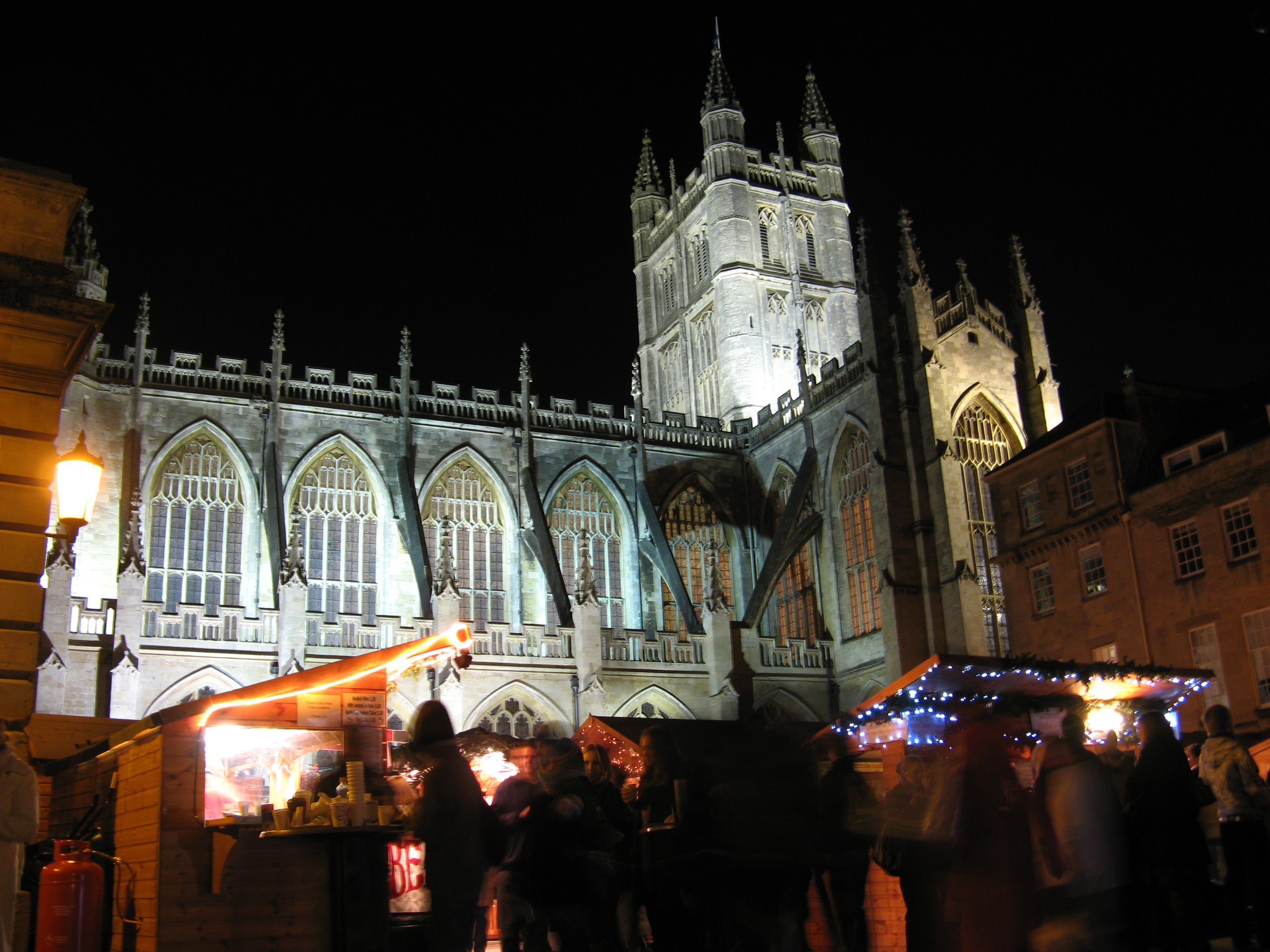
Bath sells itself on setting and reputation. For a trader, the figure that matters is the length of the run. The 2026 market runs from 26 November to 13 December, across various locations in Bath city centre, BA1 1LZ: 18 days. Birmingham’s runs from 5 November to 24 December. Everything you spend on a Bath pitch has to come back inside those 18 days.
Scale is capped and published. There will be no more than 210 chalets and units in 2026, against a planning ceiling of 260 across the event, and the footprint is largely the same as 2025, with a small increase in chalets and the addition of The Lodge bar. The organiser publishes its own trading figures too: estimated footfall of 439,000 and average visitor spend of £31.59. Those are the organiser’s numbers rather than independent ones, but they are what you have to size a pitch fee against.
And the pitch fees are out in the open, which is rare. An 18-day Barn Door or Counter top chalet is £4,200 excluding VAT in Zone 1 and £3,780 in Zone 2, with a Zone 3 Barn Door at £2,436. Corner chalets cost more, £5,145 in Zone 1 and £4,778 in Zone 2, and measure 2m by 2m with customers on two sides. Shorter runs exist: Barn Door chalets go for the full 18 days across the site, with 11- and 7-day lets on Bath Street, which in Zone 1 come to £2,567 and £1,634 excluding VAT. Choosing where you stand costs extra on top, as pitch request fees are £250 for Zone 1, £200 for Zone 2 and £150 for Zone 3, excluding VAT.
At the other end, Christmas Carts sit on Green Street, go for three or four days, and are reserved for small local micro-businesses: £165 excluding VAT for four days Monday to Thursday, or £200 for the three days Friday to Sunday. They have lighting and no power, which rules out anything you need to heat or chill. Catering is the expensive end. A mobile catering pitch for a cart or bike is £5,760 excluding VAT, and a mobile catering vehicle under 5m is £8,558. That spread, from £165 to £8,558, is the point. Bath lets you see what each kind of trading costs before you decide which kind you are.
Payment is fixed and front-loaded. Fees can be paid in full when you secure your pitch, or in three equal instalments, though not for Christmas Carts, where the full balance is required up front. For 2026 the instalments fell due on 14 July, 2 September and 14 October, and the organiser says that without the first payment the pitch is offered to another trader. You will not be granted access onsite if your full balance isn’t paid. So the whole cost clears more than a month before the market opens, and none of it comes out of takings.
The power supply is the constraint most traders miss. Electricity is included in the rent, but each chalet gets a total supply of 1,100 watts, and heat-producing appliances such as fan heaters and kettles are not allowed. Every electrical item needs a PAT certificate unless it is brand new and backed by purchase receipts; the event’s electricians are on site during the build and will test items for £7 each. Measure your kit against 1,100 watts before you cost your stock, not after.
Trading hours are mandatory. The market opens 10am to 7pm Monday to Wednesday, 10am to 8pm Thursday to Saturday and 10am to 6pm on Sunday, and stallholders may trade only during those hours and must be open for the full hours on every day they trade. Your first shift also comes earlier than the published dates suggest: Residents’ Night runs 5pm to 7pm on Wednesday 25 November, and every stallholder due to open on the Thursday must be there and able to trade. Bath asks all stallholders for a discount or offer that residents can use with proof of address, valid Monday to Friday. Separately, every stallholder must hold public liability insurance of no less than £5 million, and the application requires ACT Counter Terrorism training, or evidence you completed it within the past six months; it takes around 45 minutes.
Selection is not first come, first served. Bath weighs locality of business and materials, quality of products, ethics of the business, product range, retail mix, customer profile and price range, with particular emphasis on businesses from Bath and North East Somerset — which means a careful local maker can outrank a larger operation from further afield. The retail mix is curated so the market does not compete with what the city already offers, products must be ethically sourced, sustainable and fair trade, and having traded at Bath before does not grant you a place.
The timing, though, has gone. Applications for Bath Christmas Market 2026 have now closed, with the organiser hoping to get in touch with all applicants by July, a date now past. The organiser said that window would open from the end of March and run for about four weeks, so late March is when to start watching for the next one. For this season Bath is a market to read rather than apply to, and worth reading anyway: a pack this complete tells you what a well-run market expects, and hands you the questions to ask everywhere else. Bath is a prestige name on a short calendar, and the prestige is not what pays for the pitch.
Nottingham Winter Wonderland: the application route matters more than the city-centre profile
Nottingham Winter Wonderland opens on 12 November 2026 in Old Market Square, NG1 2DT, and is brought to the city by The Mellors Group, listed at 15-16 Long Row, Nottingham. The site lists a Christmas Market and market stalls among its 2026 features, alongside an observation wheel and a toboggan slide. What the organiser has not published is a closing date, a stall or chalet count, trading hours, or what a pitch costs. So you can act on Nottingham today, but you cannot yet price it.
The way in is a page headed Nottingham Winter Wonderland Market Trader Applications 2026, which asks anyone interested in trading at the 2026 event to fill in their details so the organiser can get in touch. One thing to expect on that page: it also carries a notice saying applications for the 2025 event are closed and to check back later for next year’s. That notice is about last season and the 2026 form sits alongside it, but it is confusing enough to be worth querying when the organiser replies.
That invitation sounds slight. The form behind it is not. It asks for your business or legal name as registered, trading name if different, business type, Companies House and VAT numbers where they apply, and years trading. Then your retail categories, ticked from a list running from hot and cold food prepared on site and alcoholic drinks for on-site consumption through to confectionery, gifts and crafts, clothing and accessories. Then the physical side: whether you need a cabin and whether it should be 3m or 5m, or the dimensions of your own structure, your power requirement in kW or amps, and whether you need water and wastewater disposal. Then the commitment: the full trading period or selected dates, whether you will trade on New Year’s Eve, whether you can comply with all mandatory hours, how many staff need a site induction, and the date you will submit your Health and Safety documents. Finally your public, employer’s and product liability limits, each with its expiry date.
One of those questions deserves to go back the other way. You are asked to confirm that you can comply with all mandatory hours, but those hours are not published, and neither is a closing date. How long the market trades, and whether New Year’s Eve is expected of you, are things to establish in the reply rather than read off the page.
Two things should change how carefully you fill in the rest. You have to accept that incomplete Health and Safety or insurance documentation may invalidate your application, and that a £500 bond will be required on signed agreement. And the details you give are used to prepare your official Market Licence Agreement if your pitch is accepted, so omissions or changes after submission may count against you. The form also takes an authorised signatory’s name, position and date. That is a signature, not an enquiry.
So it is a register of interest that behaves like an application, and it pays to treat it as one. Have your product list and price points settled, know which unit you would bring and its footprint, know your power draw, and settle your position on food, drink and alcohol if that is what you sell, since each is a category you have to tick. Have your insurance evidence to hand, limits and expiry dates included, rather than promised. None of that is unusual to produce; it is only slow to produce from a standing start. Send it in, then hold your stock, staffing and travel budget back until the organiser comes back with dates, hours and fees you can put numbers to.
Edinburgh Christmas Market: a major destination that still has to prove trader-readiness

Edinburgh is Nottingham’s opposite. Nottingham has an open form and an unpriced event; Edinburgh has a thoroughly documented event and a closed door.
Start with what is published, because there is a great deal of it. Edinburgh’s Christmas is created and produced by Unique Assembly on behalf of the City of Edinburgh Council, and in 2025/26 it welcomed over 3 million visitors across seven weeks of celebrations and generated an economic impact of over £170 million for the local economy. The 2026 season runs from Saturday 14 November 2026 to Sunday 3 January 2027. The markets sit in East Princes Street Gardens, are free to enter, and open 10:00 to 22:00 daily, with listed date-specific variations and a closure on Christmas Day. The LNER Big Wheel and the 80m Around the World Starflyer stand among the stalls. A twelve-hour trading day across a run that long is a serious commitment of staff, and it is the first thing to cost when the door does open.
What is missing is everything with a price on it. There is no published stall or chalet count, so you cannot work out how many pitches that footfall is shared between. There is no published pitch cost, no eligibility rule and no 2026 trader pack. Nottingham does not publish its fees either, but its trader form at least spells out what the organiser will require of you, down to cabin sizes, mandatory hours and a £500 bond. Edinburgh’s trader page does not go that far, so the most famous name on this list is also the one you could plan with least.
On the question that settles 2026, though, it is direct. Applications for Edinburgh’s Christmas Market 2026/27 are closed, and the organisers say they are in the process of contacting all applicants. The trader page points at the next window instead: keep an eye out for applications re-opening in Spring 2027, for the 27/28 season.
Treat that as the pattern rather than as bad luck. The 2026/27 window shut before the 2026 season began, and the next one opens in spring, months before the market it feeds actually trades. If you come to a market of this size in the autumn, you were always going to be a year late. So put Spring 2027 in the diary and use the wait: get your insurance evidence current and to hand, your product range and photographs ready, your unit’s footprint and power needs written down, and your food, drink or alcohol permissions settled if that is what you sell.
Edinburgh is a benchmark for 2026, not a shortlist entry. Measure the other markets against its run and its reach by all means, but do not hold a slot in this season’s plan for it. The decision here is about 2027/28, and it starts with a date in the diary rather than a form.
London Christmas Markets: separate opportunities, not one large market
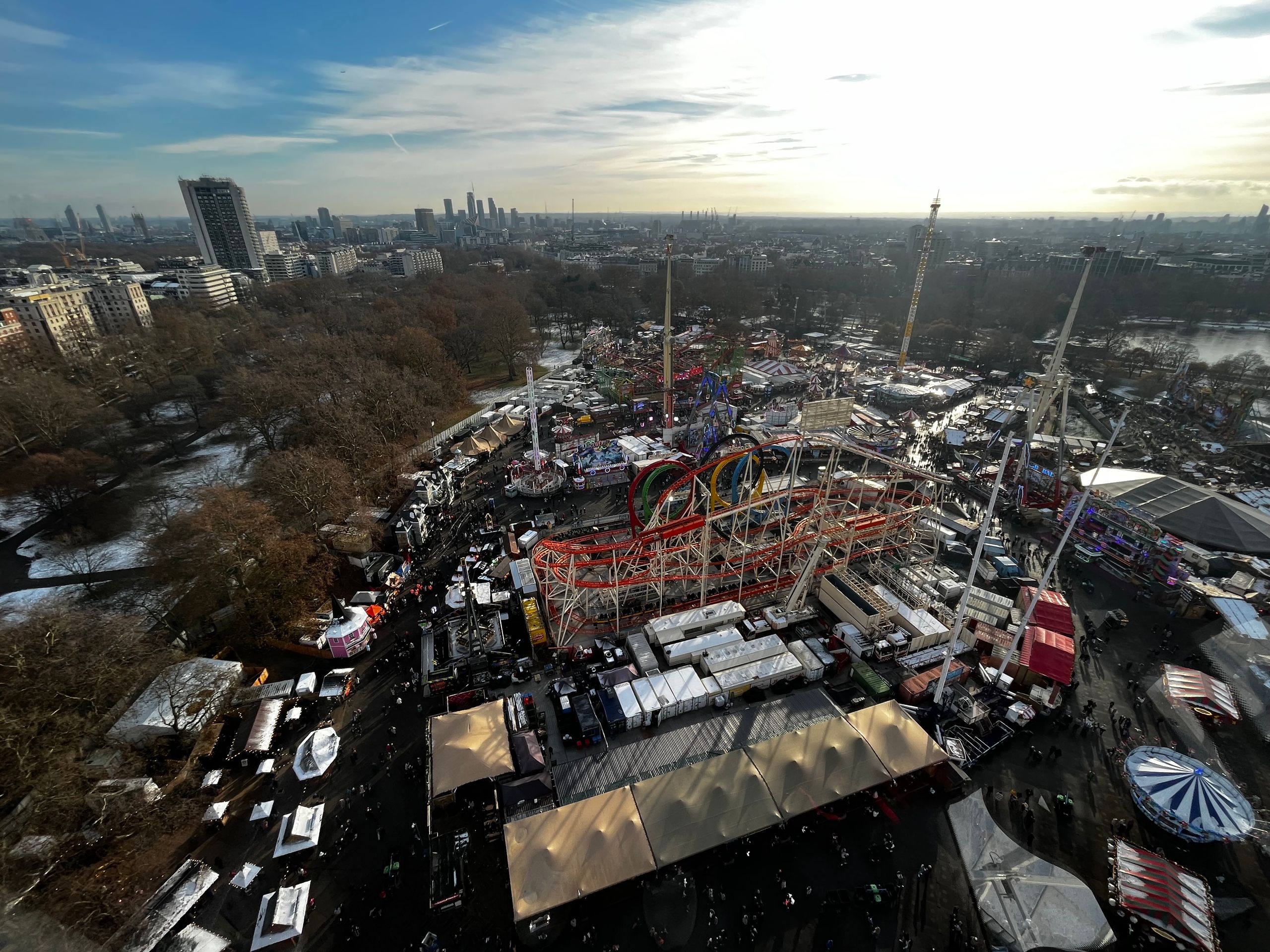
Treating London as one line on a shortlist is the mistake here. The four below sit in different parts of the city and, on the evidence we could verify, offer very different levels of trader access.
Hyde Park Winter Wonderland. The organiser says its gates open for six weeks, from 19 November 2026 to 3 January 2027, and the Christmas Market runs to those same dates. More than 60 traders are joining it in 2026, selling locally sourced and handmade crafts, classic Christmas shopping staples, and food and drink. What you would be trading inside is an attraction park rather than a market square: the site carries more than 150 attractions, rides and shows, and the organiser is selling £1 off-peak entry tickets for 2026 on Monday-to-Thursday sessions throughout November. One detail matters more than it looks if you sell food or drink. Entry is free to anyone who pre-books more than £25 of attractions, rides, games and food and drink packages online in a single transaction, so some of the visitor’s spend is committed before they reach your counter. What we could not find is a published 2026 trader application route, pitch price or eligibility rule for the Christmas Market. So this is an enquiry to make rather than a form to fill in, and the two things to ask are how traders are chosen and what a pitch includes.
Southbank Centre. This is the London entry with a trader route you can actually see. Southbank Centre Food Market publicly invites traders to apply and says it is always looking for new and innovative traders to appear at the market. Read what it sells before you act on that. The categories on the page are Asian street food, meat lovers, comfort food, Mediterranean flavours, sweet stuff, tea, coffee and juice, and beers, wines and cocktails, with Choco Fruit, Crêpes à la carte and Emmy Bakery among the sweet-stuff traders. Every category listed is food or drink, so if you sell crafts or gifts, ask whether you are eligible before you spend time on an application. The public hours are a weekend pattern: Friday 12 noon to 9pm, Saturday 11am to 9pm and Sunday 12pm to 6pm. What we could not verify is anything Christmas-specific from the organiser: no 2026 festive dates, no stall count, no fees and no eligibility rules. Visit London expects the Southbank Centre Winter Market to run from mid-November to early January, with free entry, but a visitor guide’s expectation is not a published season.
Covent Garden and London Bridge. Both are visitor-guide entries and nothing more. Visit London expects Covent Garden Christmas to run from early November, and London Bridge Christmas Market from mid-November to early January, each with free entry, in a guide published on 24 July 2026 and last edited on 07 September 2026. The same guide says most London Christmas markets open in early or mid-November and run through late December or early January, which is the point: an expected month is the general pattern for the city, not a commitment by an organiser. Neither has published stall numbers, fees or a trader route we could verify, so there is nothing here to plan a season around. Do not fill the gap with last year’s listings.
So London is three actions rather than one. Southbank you can approach today. Hyde Park you can cost and monitor, with its dates and its trader count already in hand. Covent Garden and London Bridge are worth a diary note and nothing more, until an organiser publishes something you can act on. Nothing we could verify suggests that one application covers more than one of them, so budget your time accordingly: separate enquiries, separate terms, separate decisions.
Bristol Christmas Market: include only what 2026 trader information supports
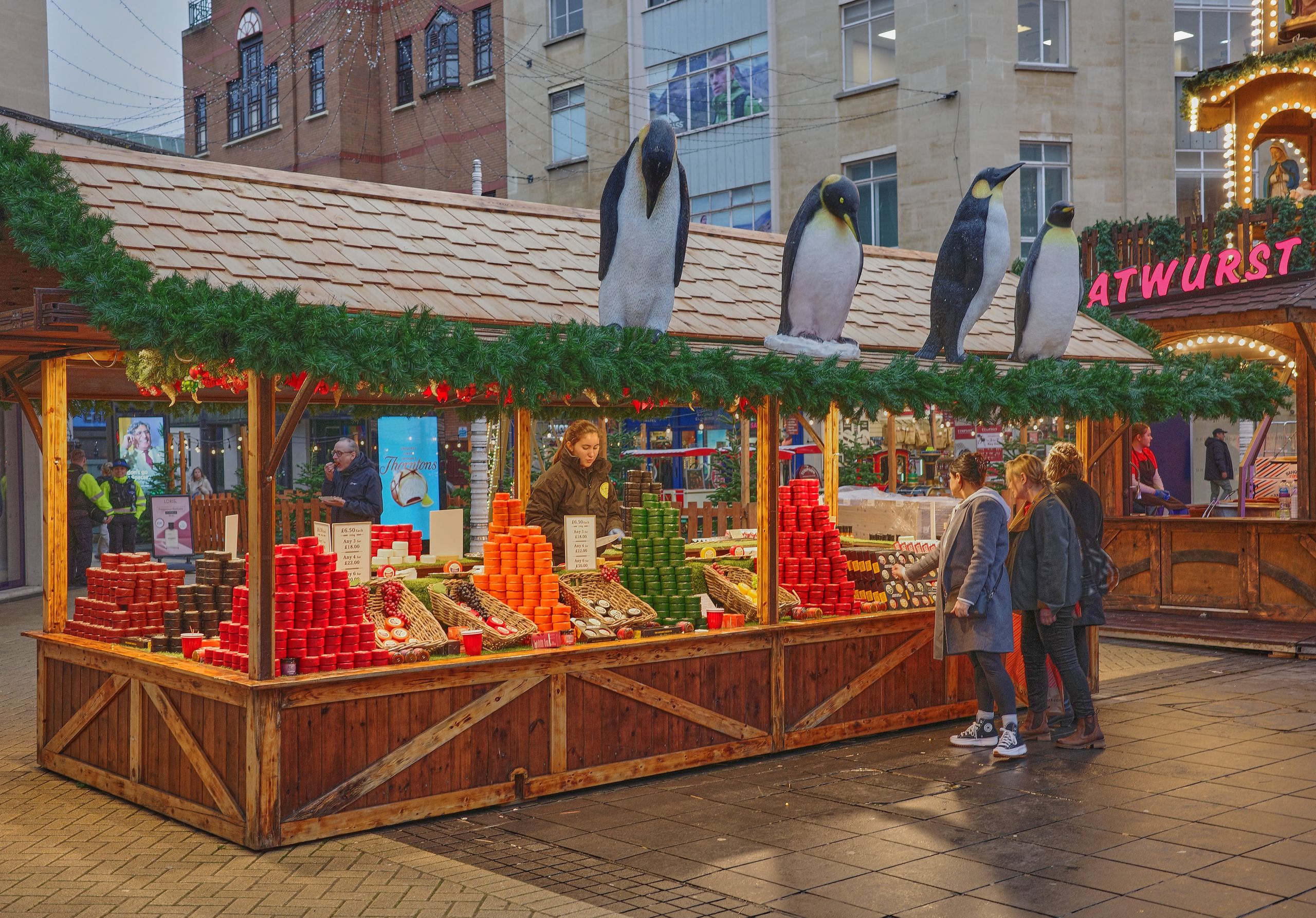
Bristol is the entry where the door is open but the terms are not on the table. Bristol City Council welcomes applications from prospective traders for its outdoor markets, which it lists as the Indies Market, the Street Food Market, the Broadmead Market and the Christmas Market, and says it promotes all stall vacancies on its Trade with us page, on Instagram and on Facebook. Prospective traders can call 0117 922 4014 or email [email protected] to discuss opportunities or arrange a site visit. That last offer is worth acting on rather than reading past: a site visit is how you find out what a pitch is really like before you commit to one. If you run a food trailer or truck, say so when you call, because the council particularly encourages street food traders to enquire about pop-up opportunities. On indoor space, the council’s position is that there are no current vacancies, though you can join the indoor markets waiting list if you are interested but not yet ready to apply.
Be specific about which market you mean, because Bristol has several. The one carrying the Bristol Christmas Market name sits at Broadmead in Bristol Shopping Quarter, BS1 1UX, with festive stalls selling sweet treats and Christmas crafts, live music, and Santa and his reindeer. It runs its own website, which carries a Trade With Us link and names Relevention Ltd on its contact page, so that is a second place to ask. We could not verify whether that route and the council’s Christmas Market listing lead to the same application. The city’s Christmas markets stretch from the Harbourside to the Bristol Shopping Quarter, so be clear which site you are asking about. What we could not find anywhere is the part you would cost a season on: no 2026 dates, no stall count and no pitch price. So this is an enquiry to open now and a commitment to make later.
There is firmer 2026 detail for a separate Bristol market, and it is worth a look while you wait. St Nick’s Christmas Market will be held outdoors from Friday 20 November to Thursday 24 December 2026, with two kinds of pitch: 10 traditional wooden chalets, 3m x 2.4m, on Corn Street, and up to 25 umbrella pitches on Corn Street and Wine Street. The chalets are for retail and pre-packaged foods only, so if you cook or serve on site, settle which pitches you are eligible for before anything else. Published trading hours are 9.30am to 6pm on Saturday and 10am to 4pm on Sunday; the weekday line reads Monday to Friday, 9.30pm to 5pm, which cannot be right, so get the weekday start confirmed before you build a rota or book staff around it.
Approval comes before a pitch here, and one of the two pitch types has already gone. Chalet applications have now closed. Umbrella pitches are available to approved traders from Wednesday 1 July, on a first-come, first-served basis, which makes getting approved the work and asking what is still free the first question. The route depends on what you sell: non-food traders wanting a market umbrella apply through Trade at Bristol Indies’ Market, while street food applications are considered for Wine Street trading through the Street Food Market route. Work out which of those you fall under before you fill anything in.
What to have ready before a Christmas market acceptance arrives
That is the whole shortlist sorted: what you can act on now, what to prepare and monitor, what to treat as a benchmark for next year, and the three entries where too little is published to decide anything at all. One item sits behind all of it, and it is the one to settle first.
Look at what the organisers in this guide actually ask for. Manchester wants your public liability policy document, or your NMTF membership card, attached to the registration itself. Bath requires every stallholder to hold public liability cover of no less than £5 million. Nottingham asks for your public, employer’s and product liability limits with their expiry dates, and makes you declare that you understand incomplete insurance documentation may invalidate your application. Three organisers, three levels of detail, and the same requirement underneath. CMTIA puts the general case plainly: most markets and events now require Public and Products Liability cover before they will let you trade. It is part of being considered at all, not something you arrange once you have been accepted.
Note that Nottingham asks for expiry dates as well as limits. A policy that lapses partway through a run is the same problem as no policy, and chasing a renewal in December is the last job you will want.
Which limit you need is set by the organiser rather than by you. The requested limit is usually £5,000,000, but some councils insist on £10,000,000, so ask before you buy rather than after. You can get Public and Products Liability with a £5,000,000 limit at £69 per year and the £10,000,000 limit at £82 per year; with Employers’ Liability added, those become £101.50 and £114.50. Those prices include Insurance Premium Tax at 12% and a £10 administration fee. Employers’ Liability is a legal requirement for most UK employers, and it is bought alongside a Public and Products Liability policy rather than on its own.
If you plan to work several of these markets, there is no limit on the number one policyholder can attend, provided they fall on different days or at different times. Two markets running on the same days are the exception, and that needs a second policy.
So get the cover in place, keep the certificate where you can attach it to a form in five minutes, and put its expiry date in the same diary as the application windows. After that, the choice between these markets comes down to what each organiser has published and when it opens its doors.
Image Credits:
Bath Christmas Market: photo by Rwendland, CC BY-SA 4.0, resized.
Bristol Christmas Market: photo by Anthony O’Neil, CC BY-SA 2.0.



